
SPECIES: Grus americana
HEIGHT: ~ 152 cm, 5 ft
WEIGHT: ~ 7 – 8 kg; 15 – 17 lb
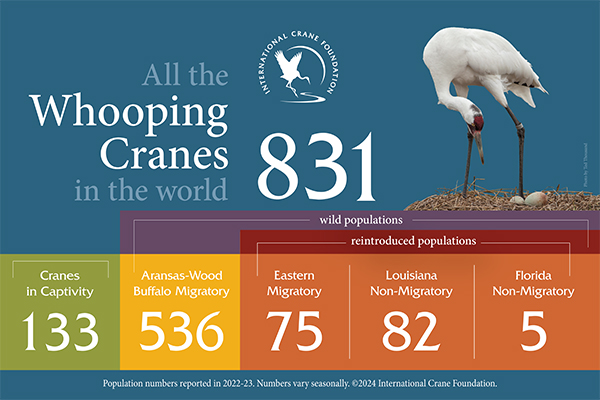
POPULATION: 831 (captive and wild)
TREND: Increasing
STATUS: IUCN: EN; ESA: E, EX; Cites Appendix I
IDENTIFICATION
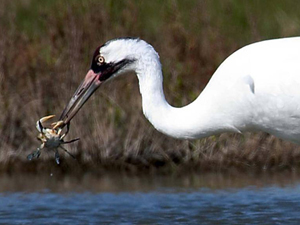
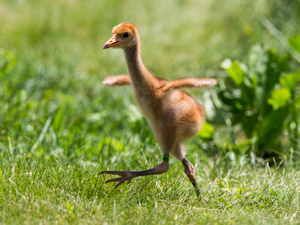
Adults – red patch on forehead, black mustache and legs, black wing tips visible in flight; juveniles – cinnamon-brown feathers
Did you see a banded Whooping Crane? Click here to report your sighting.
RANGE
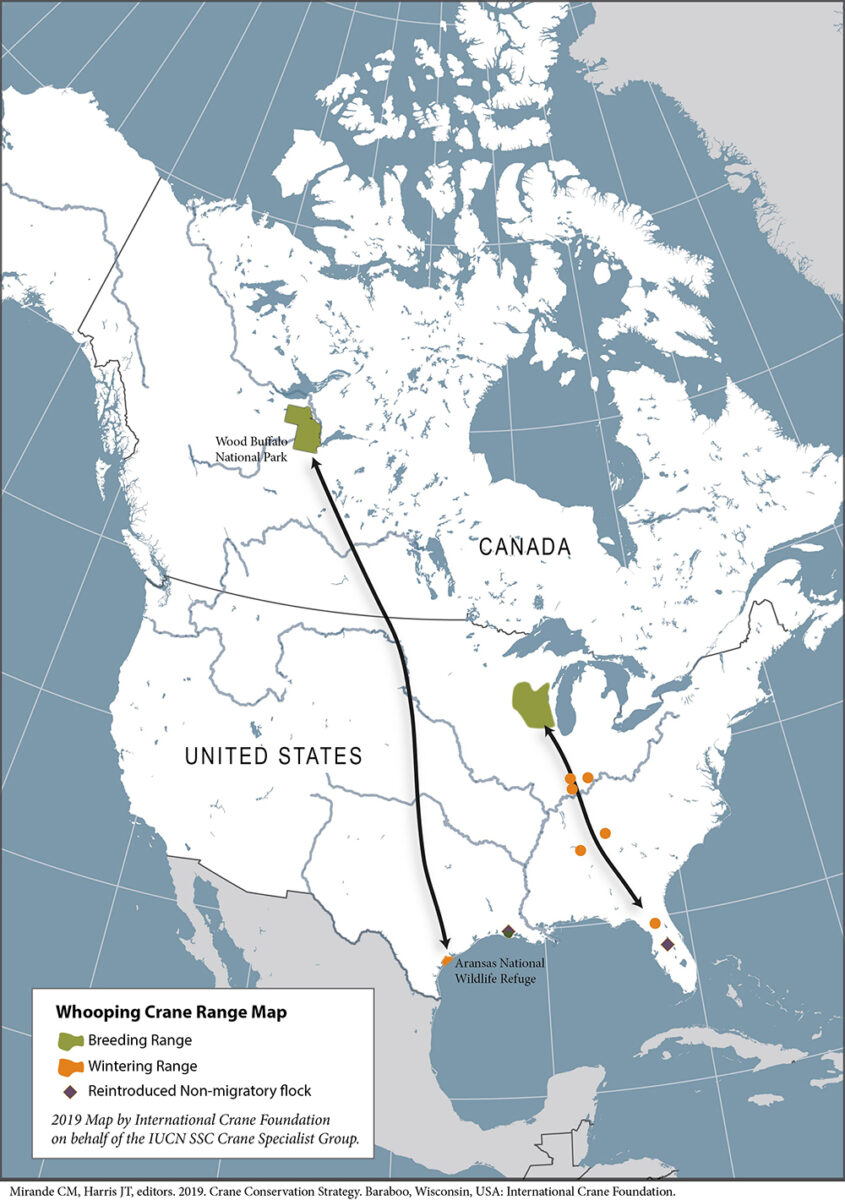
Two distinct migratory populations summer in northwestern Canada and central Wisconsin and winter along the Gulf Coast of Texas and the southeastern United States, respectively. Non-migratory populations live in coastal Louisiana and central Florida.
View the Where are the Whoopers interactive map to view the last known location of cranes in the Eastern Migratory Population. AND follow Whooping Crane 42-09 over two years as she successfully navigates the dangers and triumphs of life in the wild in our new story map.
DIET
Plant tubers, blue crabs, small mammals, amphibians, reptiles, insects.
CALL
Loud, whoop-whoop! Listen to Whooping Crane calls:
 Contact Call | A soft, purring call expressing reassurance and location.
Guard Call | A sharp, single call expressing alarm.
Unison Call | A duet performed by a pair, to strengthen their bond and protect their territory.
THREATS
Loss or deterioration of critical wetland habitat – including reduced fresh water on wintering grounds in Texas, sea-level rise, low genetic diversity, power line collisions, predation, disturbance at nest sites, and illegal shootings.
OUR PLAN
With creativity and dedication, we are bringing the Whooping Crane back from the brink of extinction. Click on the links below to explore how we are protecting Whooping Cranes and learn how YOU can get involved:


Learn more about Whooping Cranes: