SPECIES: Grus antigone – Indian, Grus sharpii – Eastern, Grus gilli – Australian
HEIGHT: ~ 176 cm, 5.8 – 6 ft
WEIGHT: ~ 6.35 kg, 14 lbs
POPULATION: ~ 15,000 – 20,000
TREND: South Asia and Australian populations uncertain; China-Myanmar population stable; Lower Mekong Basin population decreasing
STATUS: IUCN: VU; Cites Appendix II; CMS II
IDENTIFICATION
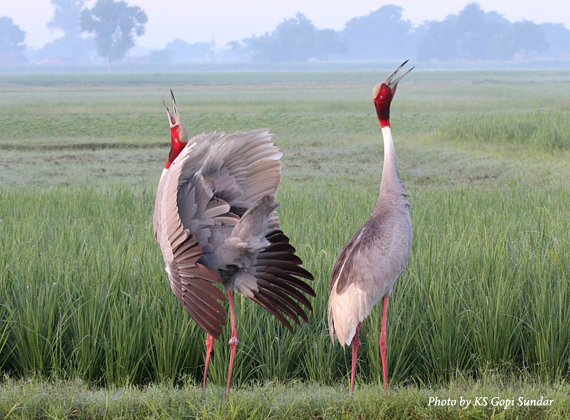
Adults – light grey body plumage, greenish skin crown, the rest of the head and upper neck are covered with red skin, the ear is covered by a small area of greyish feathers, legs are red; juveniles – cinnamon-brown feathers, and the greyish ear patch is not yet obvious.
RANGE
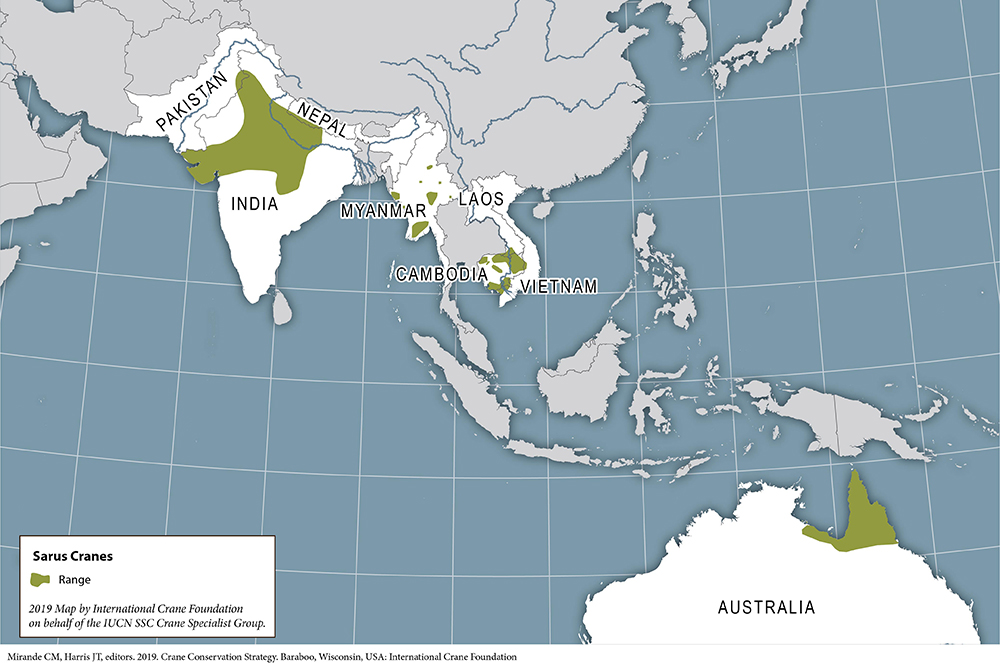
The current range of the Indian Sarus Crane includes the plains of northwestern India, the western half of Nepal’s Terai Lowlands and parts of Pakistan. The Eastern Sarus Crane occurs in Myanmar, Laos, Vietnam and Cambodia. The Australian Sarus Crane occurs in northern Australia.
DIET
Aquatic plants, invertebrates, grains, small vertebrates and insects.
THREATS
Water diversions and unsustainable conversion of wetlands, habitat loss, poisoning, human disturbance, collisions with power lines, invasive species and changes in agricultural practices.
OUR PLAN
Strong cultural ties to cranes and wetlands in South/Southeast Asia provide unique opportunities to engage people in the conservation of these intensely settled landscapes using the Sarus Crane as a flagship species, which in turn also benefits local communities and other species.
Securing the Sarus Crane population in South Asia through community-supported conservation practices and governmental policies that maintain the rich biodiversity of agricultural landscapes. We are:
- Implementing projects at key sites in northern India to understand and find adaptive solutions to the impacts of climate change and habitat loss on Sarus Cranes and wetlands.
- Reducing threats to Sarus Crane populations from power line collisions, illegal conversion of wetlands and poisoning by agricultural and industrial chemicals.
- Supporting a demonstration site at Lumbini, the birthplace of Buddha, to showcase the Terai landscape of Nepal used by Sarus Cranes and provide conservation education based on the Buddhist love for nature.
- Collaborating with village councils, farmers and conservation partners to identify and implement strategies that preserve the agricultural and wetland landscapes supporting cranes and communities.
- Partnering with the Indian conservation community on advocacy to improve state and federal wetland policy.
Supporting the growth of Southeast Asia’s population of Sarus Cranes through community-based conservation efforts and broader Mekong River initiatives to protect important wetlands. We are:
- Securing crane dry season habitats in the Mekong Delta and breeding habitats in northern Cambodia and Vietnam by strengthening conservation practices at existing crane sites and safeguarding small remnant wetlands that cranes could use.
- Continuing Mekong Delta community-based wetland and livelihood conservation programs and adapting these models to other important crane areas in Cambodia and Vietnam.
- Mentoring the development of the Mekong Wetland University Network to expand and diversify its contributions to critical wetland and crane status surveys in new areas such as Myanmar, to Mekong basin research and to the training of conservation scientists from the Mekong countries.
- Assessing and mitigating impacts of large-scale river basin development and climate change on Sarus Cranes and wetlands in collaboration with other key partners in the region.
Learn more about Sarus Cranes: