Whooping Cranes are one of North America’s rarest and most endangered species, removed from the eastern United States until a multi-state reintroduction effort began in 2001. Today, this population of Whooping Cranes is growing. However, it is still small and faces human-induced threats such as wetland habitat loss and degradation, powerline collisions, poaching and more.
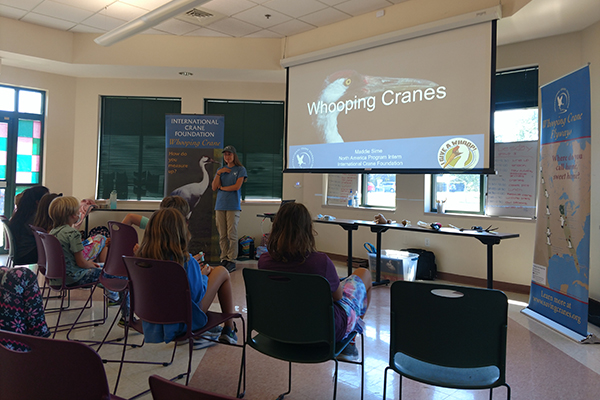
As a result, the future of Whooping Cranes depends on youth that are educated, encouraged, and inspired to protect cranes and wetlands in their backyard and around the world. In Wisconsin, Indiana and Alabama, the International Crane Foundation is committed to providing interactive and engaging classroom environmental education programs about Whooping Cranes for grades K-12.
Our programs are provided in-person or virtually, and we are happy to accommodate multiple classrooms in a single day. A small travel and speaking fee is associated with our programs to directly support our conservation and outreach efforts to protect Whooping Cranes in the eastern United States. To book a program for your school, please contact Whooping Crane Outreach Coordinator Stephanie Schmidt.
Programs Offered
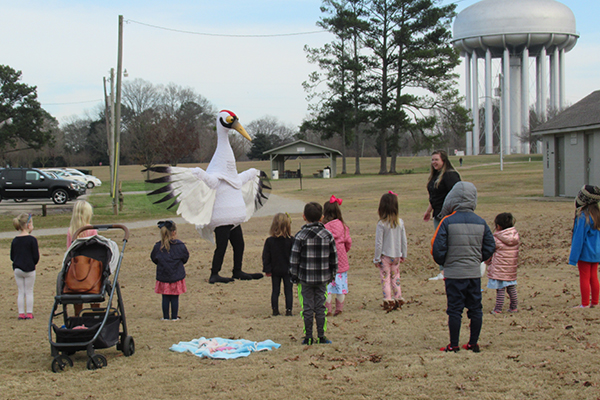
Dance Like a Crane | Grades K-3
- 15-minute program. Students will learn about crane behaviors and practice communicating like cranes while showing off their best crane dance moves. This activity can be done inside or outside and works well alongside most programs as a wrap-up activity.
Wetland in a Bag | Grades K-5
- 15-minute program. Students will learn about the function and importance of wetlands through metaphors. This activity can be done inside or outside and works well alongside most programs as a wrap-up activity.
Name that Adaptation | Grades 3-6
- 30-minute program. Students will learn how to define an adaptation, describe several crane adaptations, and explain how these adaptations help cranes survive in wetlands. This activity uses our crane trunk, including artifacts such as a crane leg, crane chick plushie, crane egg, crane feather and crane skull. The program can be enhanced with a PowerPoint presentation.
Be a Field Biologist | Grades 3-7
- 30-minute program. Students will engage in an interactive program discussing the role of field biologists and the supplies used to study cranes. Following the discussion, students will participate in an activity where they will learn the ins and outs of field biology techniques through firsthand practice.
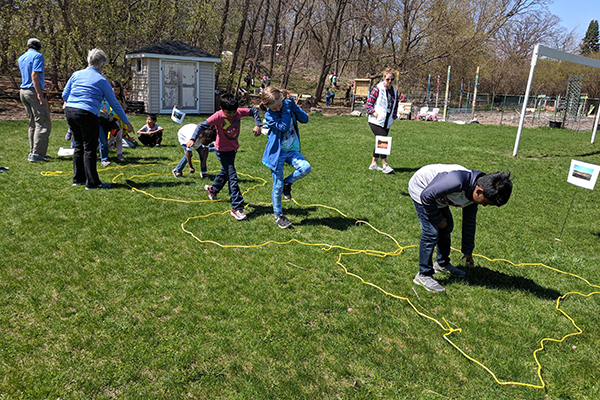
Sandhill Crane Migration | Grades 4-8
- 30-minute program. Students will learn about crane migration through an interactive game exploring human actions and the impacts of wetland loss, urbanization, development, habitat conservation, community engagement and conservation action on crane populations. This program is active and involves jumping and throwing balls. This program should be done outdoors or in a gym.
Whooping Cranes | Grades 4-8
- 30-minute program. Students will learn about the history of Whooping Cranes, where Whooping Cranes live throughout the year, the threats they face, and how they can be heroes for Whooping Cranes in their state. In this program, they will understand how wetland loss and other threats affect Whooping Crane populations and how they can protect Whooping Cranes in their community.
Be a Field Biologist – Advanced | Grades 8-12
- 30-45-minute program. Students will engage in an interactive program discussing the role of field biologists and the supplies used to study cranes, such as leg bands, tracking equipment, and more. Following the discussion, students will participate in an activity where they will learn the ins and outs of field biology techniques through firsthand practice with research tools.
Whooping Cranes and Careers in Conservation | Grades 9-12
- 30-45-minute program. Students will learn about the careers they can pursue to be involved in crane conservation. Staff from the International Crane Foundation will highlight their work with the captive and wild Whooping Cranes and community outreach and education while seamlessly sharing the story of the Whooping Crane reintroduction effort and opportunities for student involvement.
Cranes in Culture | Grades 9-12
- 45-60-minute program. Students will learn about the history and significance of cranes in art and culture worldwide. Following the presentation, we will introduce a paper crane activity. All supplies for the activity are provided at no additional cost.
Cranes over Wisconsin/Indiana/Alabama | Grades 9-12
- 30-45-minute program. Students will participate in this interactive program exploring the history of cranes in the eastern United States, the science behind the reintroduction, the continued efforts to protect cranes and how to be a crane ambassador.
Species Spotlight: Sandhill Cranes | Grades 9-12
- 45-minute program. Students will learn about Sandhill Cranes, including how to identify them, their history, habitat associations and their annual cycle. When discussing their yearly cycle, we will discuss the threats they face at different times and along their flyway. By the end of this program, students will be knowledgeable about Sandhill Cranes and be educated and motivated to protect their local cranes!
Species Spotlight: Whooping Cranes | Grades 9-12
- 45-minute program. Students will learn about Whooping Cranes, including how to identify them, their history, habitat associations and their annual cycle. When discussing their yearly cycle, we will discuss the threats they face at different times and along their flyway. By the end of this program, students will be knowledgeable about Whooping Cranes and be educated and motivated to protect their local Whooping Cranes!
Are you interested in teaching the crane curriculum in YOUR classroom? Please look into our crane trunk rental options and place your reservation today!