SPECIES: Grus nigricollis
HEIGHT: 115 cm, 4 ft
WEIGHT: 5.35 kg, ~ 12 lbs
POPULATION: 10,000 – 10,200
TREND: Eastern and central populations stable; western population increasing
STATUS: IUCN: NT; Cites Appendix I; ESA: E; CMS I, II
IDENTIFICATION
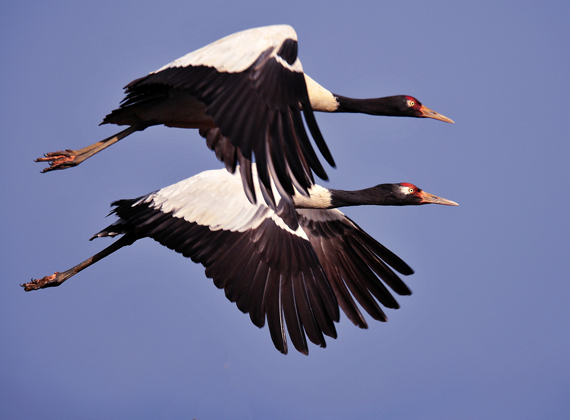
Adults – red crown, head and neck are black, except for small light grey spot extending backward from the yellow eye, ashy gray body feathers, black wings, tail and legs; juveniles – black and gray body plumage, cinnamon-brown head.
RANGE
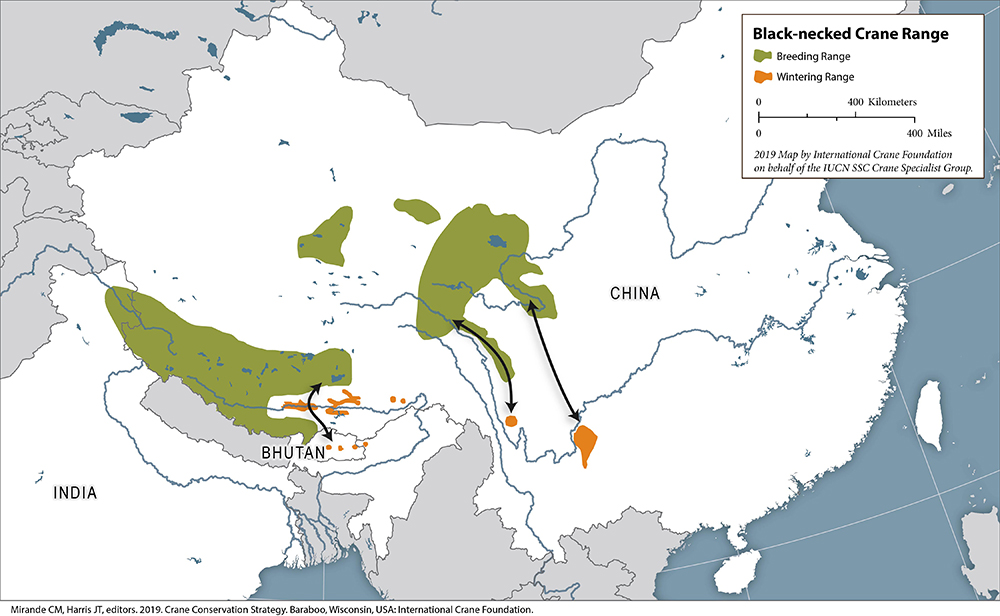
Black-necked Crane breeding range includes the Himalayan mountains, as well as parts of central China and northern India. Their wintering range includes parts of southern China and Bhutan, where they descend from higher elevations.
DIET
Plant roots and tubers, insects, snails, shrimp, fish, frogs, lizards, voles and waste grain.
CALL
Listen to Black-necked Crane calls:
 Guard Call | A sharp, single call expressing alarm.
THREATS
Habitat loss and degradation related to climate change, changes in agriculture practices, pollution and environmental contamination.
OUR PLAN
Our work builds on the strong cultural ties to cranes in East Asia, to engage local communities and policy makers in the conservation of protected areas and their surrounding landscapes, including:
Expanding the size and range of Black-necked Crane populations in western China. We are:
- Supporting pilot projects to reduce degradation around key wetlands through alternative livelihoods and agriculture practices.
- Undertaking long-term monitoring of selected breeding areas to assess the impacts of climate change on cranes and key wetlands, and to develop measures for adaptation to climate change.
- Strengthening environmental education efforts at Cao Hai and Ruoergai, using these efforts as a model to increase community awareness and pride in crane conservation in other areas of China.
Learn more about Black-necked Cranes: